
The Distance That Costs: Transportation and Urban Housing Affordability

By: Dr Pallavi Sharma, Head of Department, Amity School of Architecture and Planning, Amity University Gurugram
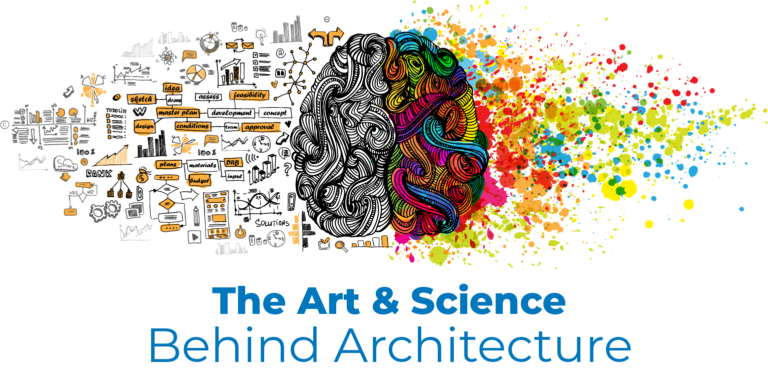
Introduction: Architecture is a multidisciplinary domain that integrates artistic expression with scientific principles to create functional, safe, and sustainable built environments. While architecture is often visually interpreted as an art form, its foundation lies equally in science. Disciplines such as physics, chemistry, material science, and environmental studies play a decisive role in shaping how buildings are designed, constructed, and operated. This article serves as a knowledge repository outlining the scientific principles underlying architectural design and aims to provide a conceptual understanding of how science informs architectural decisions, supporting learners and practitioners in developing a holistic perspective of the discipline.
Architecture cannot be classified exclusively as either art or science; instead, it is best understood as a hybrid discipline where creative design is guided by empirical knowledge and technical reasoning. The architectural process involves understanding environmental, cultural, and infrastructural contexts, identifying functional and spatial requirements, integrating structural systems and building services, and responding to climatic and site-specific conditions. These processes rely on analytical thinking, systematic evaluation, and scientific methods similar to those used in engineering and applied sciences.
Architectural design follows a structured methodology that closely parallels the scientific method. It begins with observation and data collection through site analysis, climate studies, and assessment of user needs. This is followed by problem definition, where functional, structural, and environmental challenges are identified. Conceptual solutions and spatial strategies are then developed as hypotheses, which are tested through evaluations of structural feasibility and environmental performance. Finally, refinement and execution take place through construction detailing and material selection. This systematic approach ensures that architectural solutions are both creative and technically sound.
Physics provides the fundamental principles that govern the behavior of buildings and materials, enabling architects to design structures that can safely resist forces while providing environmental comfort. Buildings are continuously subjected to forces that influence their stability and durability. These include compressive forces that push materials together, commonly experienced by columns and walls, and tensile forces that pull materials apart, as seen in cables, ties, and reinforcement. Structures also bear dead loads, which include the permanent weight of structural and non-structural components, and live loads generated by occupants, furniture, equipment, and temporary activities. Physics explains how these forces are transferred through structural elements to the ground, ensuring equilibrium and safety.
Different construction materials exhibit distinct physical properties that directly affect structural performance. Concrete possesses high compressive strength but limited tensile capacity, while steel offers excellent tensile strength and ductility. The combination of these materials in reinforced concrete systems allows structures to efficiently resist both compressive and tensile forces. A clear understanding of material behavior is therefore essential for achieving structural stability, economic efficiency, and long-term durability.
Beyond structural considerations, physics also governs the environmental performance of buildings. Daylighting refers to the controlled admission of natural light into interior spaces and plays a vital role in reducing dependence on artificial lighting, enhancing visual comfort, and positively influencing occupant health and productivity. Principles of light reflection, refraction, and distribution guide the placement of openings, shading devices, and interior surface treatments. Similarly, ventilation relies on fluid dynamics and pressure differentials to facilitate air movement through spaces. Proper ventilation helps regulate indoor temperature and humidity, improves indoor air quality, and reduces energy consumption. Heat transfer mechanisms—namely conduction, convection, and radiation—inform strategies for achieving thermal comfort and energy efficiency.
Chemistry significantly influences architecture through the development and enhancement of construction materials and finishes. Modern buildings rely heavily on chemically engineered products that improve performance, durability, and sustainability. Reflective roof coatings made from acrylics, silicones, and urethanes are used to reduce heat gain, while polyurethane materials are valued for their lightweight nature, insulation properties, and long-term durability. These materials contribute to improved building envelopes and overall energy efficiency.
Insulation and energy conservation are also deeply rooted in chemical innovation. Continuous insulation systems employ thermoset or thermoplastic foams to create uninterrupted thermal barriers, minimizing air infiltration that can account for a substantial portion of heating and cooling losses in buildings. Chemistry enables these materials to be spray-applied or manufactured as rigid boards, improving both performance and ease of construction.
Chemical advancements have further transformed building systems and construction techniques. Cross-linked polyethylene (PEX) piping provides flexible, durable, and efficient plumbing solutions, while lightweight concrete produced by incorporating polystyrene beads reduces structural weight without compromising strength. These innovations enhance construction efficiency, reduce material consumption, and support the development of high-rise and large-span structures.
Emerging technologies continue to reshape architectural materials. Nanotechnology, which involves engineering materials at the molecular scale, enables the development of corrosion-resistant and self-cleaning coatings, heat-managing and energy-efficient surfaces, and antimicrobial finishes. Smart glass incorporating nanotechnology can alter its transparency to regulate sunlight and heat, improving energy performance while maintaining aesthetic quality. Engineered wood products, created using chemical binding agents, offer strong and stable components capable of spanning large distances. These materials are increasingly used in contemporary architecture to promote sustainability and efficient use of natural resources.
In conclusion, architecture is a knowledge-intensive discipline firmly grounded in scientific principles. Physics ensures structural stability and environmental comfort, while chemistry drives material innovation and performance enhancement. Together, these sciences support architecture’s core objectives of safety, functionality, efficiency, and sustainability. As a knowledge repository topic, the science behind architecture provides foundational understanding for students, educators, and practitioners, reinforcing the idea that architecture is not merely a visual or artistic pursuit but a disciplined application of scientific knowledge in service of human habitation and the built environment.
************************
What next?
Skills Required to be a good Architecture and planner
· Design & Creativity
· Technical Knowledge
· Planning & Analytical Skills
· Communication Skills
· Attention to Detail
· Project Management
· Adaptability & Learning
Career opportunities for an Architecture Planner
· Architect
· Urban Planner
· Town Planner
· Interior Designer
· Landscape Architect
· Project Manager (Construction)
· Real Estate & Property Consultant
· Government Sector Jobs
Relevant Courses in Architecture & Planning
· Doctor of Philosophy (Planning)
· Doctor of Philosophy (Planning Part Time)
********************
Copyright © 2026 amity university | All rights reserved.