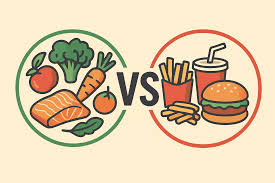
Healthy vs Junk Food


By Dr Luxita Sharma, Deputy Director, Amity Institute of Dietetics and Applied Nutrition, Amity University Gurugram
Introduction: In recent years, people have started recognizing food as not just a source of calories or basic nutrition. Food is now considered a means to keep the body healthy and help prevent diseases. This shift has brought about two key concepts in nutrition: functional foods and nutraceuticals. Both promise to improve health beyond basic nutrition, but they differ in their form, purpose, and how they are regulated.
Functional foods are essentially foods that yield health benefits beyond their essential nutritional value. The International Food Information Council defines functional foods as those that may include components that positively affect physiological functions and lower the risk of chronic diseases when consumed as part of a regular diet. Functional foods can be naturally nutrient-dense in bioactive compounds like fruits, vegetables, whole grains, and dairy, or foods that have been fortified with additional functional ingredients like probiotics, fiber, antioxidants, or phytosterols. Nutraceuticals, a word made from 'nutrition' and 'pharmaceutical,' are substances from food that can help prevent or treat disease. Unlike functional foods, which are usually eaten as regular foods, nutraceuticals are often found as extracts, capsules, tablets, or fortified products with high amounts of certain compounds. So, while all nutraceuticals are a type of functional food, not all functional foods are nutraceuticals, especially when the main goal is treatment rather than prevention.
Functional foods and nutraceuticals include a wide variety of bioactive compounds that provide health benefits through different physiological mechanisms. Among the phytochemicals, polyphenols, flavonoids, terpenoids, and carotenoids have been extensively studied for their antioxidative and anti-inflammatory properties. Besides that, omega-3 polyunsaturated fatty acids present in fatty fish and flaxseed are linked to cardioprotective effects, while probiotic bacteria in fermented foods enhance gut health and immune function. Nutraceuticals may be grouped depending on their biochemical makeup (e.g., vitamins, minerals, fatty acids), their natural source (plant or animal), or the health goal (e.g., cardiovascular support, bone health, glycemic control). The traditional botanicals used in systems such as Ayurveda and Traditional Chinese Medicine have recently been turned over in scientific literature because of their abundant and diverse bioactive compounds and preventive historical usage.
The positive effects of functional foods and nutraceuticals on health depend on various biological mechanisms:
Antioxidant Activity: Several bioactive compounds neutralize free radicals, thus lessening oxidative stress, which is the main cause of chronic diseases like cancer, cardiovascular diseases, and neurodegeneration.
Anti-Inflammatory Effects: A diet with functional foods containing polyphenols, e.g., berries, cocoa, and green tea, helps regulate inflammatory pathways and immune responses, which may lead to a lower risk of metabolic and inflammatory disorders.
Cardiovascular Protection: Impairments like phytosterols and soluble fibers help in lowering LDL cholesterol. Omega-3 fatty acids are the ones that keep the lipid profiles healthy and help in vascular integrity.
Metabolic Regulation: Nutraceuticals in the form of dietary fiber, probiotics, and specific fatty acids regulate gut microbiota and metabolic pathways, thus increasing insulin sensitivity and reducing the risk of obesity and type 2 diabetes.
Bone and Immune Health: Only a few pieces of evidence, noisily emerging on the horizon, emphasize the importance of nutraceuticals, i.e., lycopene, resveratrol, and isoflavones in the processes of bone remodeling and immune function.
An expanding body of research demonstrates that these food categories may serve as effective strategies for maintaining bone health, particularly by influencing molecular pathways involved in bone formation and resorption. Clinical evidence indicates that probiotics, prebiotics, and omega-3-enriched foods can modulate gut microbiota and reduce systemic inflammation, both of which are critical factors in chronic disease prevention. Functional foods fortified with bioactive compounds have shown potential in lowering cardiovascular risk markers, with established benefits in cholesterol reduction and metabolic regulation.
Nevertheless, a few constraints are still there. For example, the evidence of cognitive improvement caused by omega-3-enriched foods in healthy individuals is relatively weak, implying that additional large-scale, controlled studies are necessary to verify these kinds of claims.
The scientific evidence supporting functional foods and nutraceuticals continues to grow, yet regulatory frameworks for these products remain disparate across different countries. In the US, nutraceuticals are generally categorized as dietary supplements, whereas Japan and several European countries have distinct approval systems for foods with health claims. Such variations may influence the consumer trust level, the information displayed on the labels, and the health claims that are permitted. Furthermore, people's perception of these products is crucial. Individuals will more likely accept functional foods and nutraceuticals if there is strong scientific evidence, clear labeling, and proper information regarding the usage. There are uncertainties concerning the appropriate dose, the absorption by the body, and the long-term safety, which the scientific community and regulatory bodies are still investigating.
Researchers have outlined key priorities to deepen the understanding of functional foods and nutraceuticals. These comprise inventing new formulations that enhance the absorption and utilization of bioactive components by the body, creating personalized nutrition plans based on genetic profile, metabolism, and gut microbiota, conducting long-term clinical trials to provide evidence for health claims and determine appropriate intake levels, and ensuring that regulations are harmonized to protect consumers and facilitate innovation.
Functional foods and nutraceuticals represent a fascinating trend in nutrition that links what we eat to the prevention of diseases. Their benefits are constantly being validated by research, and these foods have the potential to enhance health, reduce the risk of disease, and address nutrition deficits globally. However, to fully harness their potential, it is necessary to have more research, regulations grounded in scientific evidence, and consumer education so that the health claims correspond to the actual outcomes.
*************************************
Let's understand more Details:
Skills Required to be a good Dietitian.
· Strong knowledge of nutrition and dietetics
· Good communication skills to explain diet plans clearly
· Empathy and compassion for understanding clients’ needs
· Analytical skills to assess health data and dietary habits
· Problem-solving ability to create effective meal plans
Career opportunities for a Dietitian.
· A Clinical Dietitian
· Community Dietitian
· Sports Nutritionist
· Corporate Wellness Consultan
· Food Industry / Product Development
· Research and Academia
· Private Practice / Consultancy
· Media / Health Communication
Relevant Courses in B.sc Dietetics & Applied Nutrition.·
. B.Sc. Dietetics & Applied Nutrition (Hons/ Hons with Research)
· Bachelor in Nutrition and Dietetics (Honours)
· M.Sc. Dietetics & Applied Nutrition
· Doctor of Philosophy (Dietetics & Applied Nutrition)
· Doctor of Philosophy (Dietetics & Applied Nutrition) - Part Time
****************************
References
Hasler, C. M. (2002). Functional foods: benefits, concerns and challenges—a position paper from the American Council on Science and Health. The Journal of nutrition, 132(12), 3772-3781.
Kalra, E. K. (2003). Nutraceutical-definition and introduction. Aaps Pharmsci, 5(3), 25.
Scalbert, A., Johnson, I. T., & Saltmarsh, M. (2005). Polyphenols: antioxidants and beyond. The American journal of clinical nutrition, 81(1), 215S-217S.
Sanders, M. E. (2008). Probiotics: definition, sources, selection, and uses. Clinical infectious diseases, S58-S61.
Gibson, G. R., Hutkins, R., Sanders, M. E., Prescott, S. L., Reimer, R. A., Salminen, S. J., ... & Reid, G. (2017). Expert consensus document: The International Scientific Association for Probiotics and Prebiotics (ISAPP) consensus statement on the definition and scope of prebiotics. Nature reviews Gastroenterology & hepatology, 14(8), 491-502.
Shahidi, F., & Ambigaipalan, P. (2015). Phenolics and polyphenolics in foods, beverages and spices: Antioxidant activity and health effects–A review. Journal of functional foods, 18, 820-897.
Hill, C., Guarner, F., Reid, G., Gibson, G. R., Merenstein, D. J., Pot, B., ... & Sanders, M. E. (2014). The International Scientific Association for Probiotics and Prebiotics consensus statement on the scope and appropriate use of the term probiotic. Nature reviews Gastroenterology & hepatology, 11(8), 506-514.
Katan, M. B., Grundy, S. M., Jones, P., Law, M., Miettinen, T., Paoletti, R., & Participants, S. W. (2003, August). Efficacy and safety of plant stanols and sterols in the management of blood cholesterol levels. In Mayo Clinic Proceedings (Vol. 78, No. 8, pp. 965-978). Elsevier.
Espín, J. C., García-Conesa, M. T., & Tomás-Barberán, F. A. (2007). Nutraceuticals: facts and fiction. Phytochemistry, 68(22-24), 2986-3008.
Faienza, M. F., Giardinelli, S., Annicchiarico, A., Chiarito, M., Barile, B., Corbo, F., & Brunetti, G. (2024). Nutraceuticals and functional foods: A comprehensive review of their role in bone health. International Journal of Molecular Sciences, 25(11), 5873.
Adefegha, S. A. (2018). Functional foods and nutraceuticals as dietary intervention in chronic diseases; novel perspectives for health promotion and disease prevention. Journal of dietary supplements, 15(6), 977-1009.
**************************
Copyright © 2026 amity university | All rights reserved.