Healthy vs Junk Food

By Dr Luxita Sharma, Deputy Director, Amity Institute of Dietetics and Applied Nutrition, Amity University Gurugram
Introduction: The rapid expansion of digital technology has had a major impact on the healthcare industry, resulting in the emergence of digital health tools that facilitate disease prevention, health promotion, and self-management. Among such tools, nutrition and digital health apps have become the leading instruments of behavioral dietary change, health indicators monitoring, and overall well-being support. Thanks to the global proliferation of smartphones and wearable devices, people have never before had so much easy access to individualised nutrition guidance and health tracking.
Digital health is the incorporation of digital information and communication technologies to meet health needs. Nutrition apps are a vital element of this system, providing features such as calorie counting, meal planning, nutrient analysis, hydration monitoring, and behavior change support. The worldwide rise of lifestyle-related diseases, e.g., obesity, diabetes, and cardiovascular diseases, has been the main reason for the rapid growth in the demand for such tools that enable individuals to take control of their diet and health in a proactive manner.
The improvements in mobile technology, cloud computing, and data analytics have resulted in the transformation of these apps into more interactive, accurate, and personalized tools. Numerous nutrition applications nowadays even facilitate the use of wearables to monitor physical activity, sleep patterns, and energy consumption. This, in turn, enables users to understand how lifestyle factors interrelate with diet.
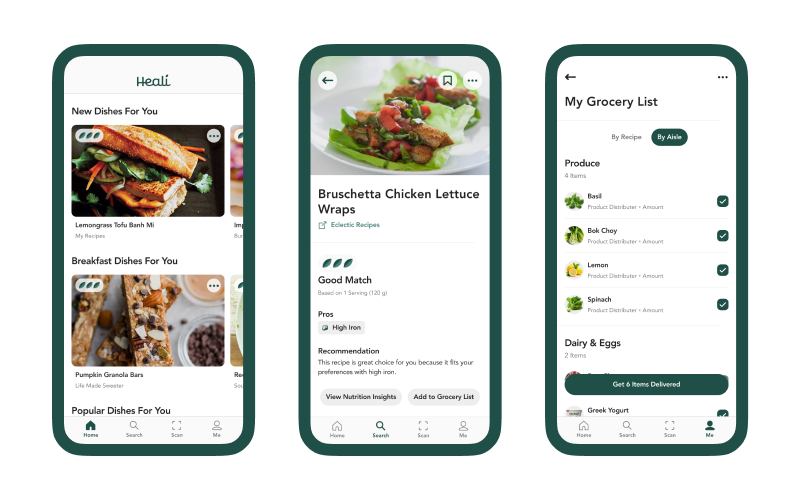
Modern nutrition apps provide users with many features designed to promote healthier eating habits and informed choices. The most frequent feature is dietary tracking, where users record their food intake and get calories and nutrient composition feedback. Extensive food databases and barcode scanning technologies make the process quicker and more convenient for users.
Another significant feature is personalisation. Several apps adjust the recommendations depending on the user's age, gender, health goals, dietary preferences, or medical conditions. For instance, people with diabetes might get carbohydrate-focused advice, while athletes could be given higher protein recommendations.
Behavior change techniques are also very common. These sets of tools include goal setting, reminders, progress visualization, and motivational messages. These methods are based on behavioral science and are intended to increase the users' commitment to healthy dietary patterns over time.
Digital health and nutrition apps bring great advantages both at the individual and population levels. Individually, they facilitate self-monitoring, which is strongly linked to enhanced dietary awareness and healthier food choices. Users become more aware of portion sizes, nutrient intake, and eating patterns, which results in better management of weight and metabolic health. These apps also improve access to nutrition information. Individuals who might not have regular access to dietitians or healthcare professionals can still obtain evidence-based guidance and educational materials. It is especially valuable in areas that are underserved or have limited resources.
Nutrition apps, as seen through a public health lens, can be instrumental in health promotion initiatives on a large scale. The anonymised, aggregated data from the apps can be insightful for researchers and policymakers to grasp dietary trends, pinpoint risk factors, and create tailored, made interventions. Besides that, digital platforms can be a vehicle for nutrition education campaigns, which can be completed quickly and at a relatively low cost.
Nutrition apps are becoming an increasingly significant factor in the prevention and management of chronic diseases. Individuals with conditions like obesity, hypertension, or type 2 diabetes can use these apps to support them in making the required dietary changes that form the core of their treatment. Constant tracking and feedback are the means by which users maintain their consistency and recognise the areas where they have to improve.
Certain apps are part of clinical care models, thus healthcare providers can have access to patients' dietary data remotely and keep track of them. This, in turn, supports telehealth and makes the interventions more timely and personalized. In the field of preventive health, apps become a means of instilling healthy eating habits at an early age, which may, in the future, result in less diet-related diseases.
Recent advances have made digital health and nutrition apps more effective than ever. To this end, Artificial Intelligence (AI) and machine learning algorithms increasingly manage user data to offer the most accurate and adaptive suggestions. For a start, AI can monitor the individual's dietary habits and consequently recommend changes that are most practical and efficient, as opposed to basing them on standard guidelines. Another cutting-edge technology is image-based food recognition. Here, instead of inputting foods manually, users can take pictures of their meals, and the app retrieves the portion sizes and nutrient content. While this feature is still in the early stages of development, it is hailed as one that significantly reduces the user's burden and, as a result, may pave the way for long-term engagement. In addition, big data analytics open the door to constant enhancement of app content and functionality. By scrutinizing user interactions and outcomes, developers sharpen features to give users more support in behavior change and, consequently, good health. On the other hand, digital health and nutrition apps, as promising as they are, encounter difficulties. One of the main challenges is data accuracy. For example, food intake that is self-reported may be incomplete or inaccurate. Food databases may not always cater to regional foods or homemade meals, which may lead to errors in estimations. Besides, there is an issue of engagement with the users. A great number of users stop app usage after a very short period, thus hampering long-term effectiveness. Therefore, the challenge of keeping the user motivated can be solved through carefully designed, user-friendly interfaces, and giving the user feedback that they find valuable.
Privacy and data security must not be overlooked either. Nutrition apps are known to gather sensitive personal and health data, which naturally elevates concerns about confidentiality and ethical usage of data. Only strong regulatory frameworks, alongside transparent data policies, can keep user trust alive. Furthermore, it is important to note that some apps may not be fully backed by science. The quality of nutritional advice can vary greatly, pointing out the necessity for cooperation between app developers, nutrition professionals, and healthcare institutions. The upcoming stage of digital health, as well as nutrition apps, is deeper integration with healthcare systems, better personalization, and stronger evidence-based design. On top of that, the use of app-based tools together with professional guidance might be the ultimate solution, mixing technology with human expertise.
Digital health and nutrition apps have the potential to bring about a positive change in both personal and public health management. By delivering accessible, personalized, and interactive tools, these apps give individuals the power to make informed dietary choices and adopt healthier lifestyles. Although there are some issues with accuracy, engagement, and data privacy, which still need to be solved, further innovation and evidence-based development can unleash their full potential. Being a part of a larger digital health ecosystem, nutrition apps can become an important player in improving dietary behaviors, preventing chronic diseases, and promoting long, term well, being.
*********************************
What next ?
Skills Required to be a good Dietitian.
· Strong knowledge of nutrition and dietetics
· Good communication skills to explain diet plans clearly
· Empathy and compassion for understanding clients’ needs
· Analytical skills to assess health data and dietary habits
· Problem-solving ability to create effective meal plans
Career opportunities for a Dietitian.
· A Clinical Dietitian
· Community Dietitian
· Sports Nutritionist
· Corporate Wellness Consultant
· Food Industry / Product Development
· Research and Academia
· Private Practice / Consultancy
· Media / Health Communication
Relevant Courses in B.sc Dietetics & Applied Nutrition. ·
· B.Sc. Dietetics & Applied Nutrition (Hons/ Hons with Research)
· Bachelor in Nutrition and Dietetics (Honours)
· M.Sc. Dietetics & Applied Nutrition
· Doctor of Philosophy (Dietetics & Applied Nutrition
· Doctor of Philosophy (Dietetics & Applied Nutrition) - Part Time
********************
References
Boushey, C. J., Spoden, M., Zhu, F. M., Delp, E. J., & Kerr, D. A. (2017). New mobile methods for dietary assessment: review of image-assisted and image-based dietary assessment methods. Proceedings of the Nutrition Society, 76(3), 283-294.
Brickwood, K. J., Watson, G., O'Brien, J., & Williams, A. D. (2019). Consumer-based wearable activity trackers increase physical activity participation: systematic review and meta-analysis. JMIR mHealth and uHealth, 7(4), e11819.
Celi, L. A., Lokhandwala, S., Montgomery, R., Moses, C., Naumann, T., Pollard, T., ... & Stretch, R. (2016). Datathons and software to promote reproducible research. Journal of Medical Internet Research, 18(8), e6365.
Flores Mateo, G., Granado-Font, E., Ferré-Grau, C., & Montaña-Carreras, X. (2015). Mobile phone apps to promote weight loss and increase physical activity: a systematic review and meta-analysis. Journal of medical Internet research, 17(11), e253.
Hamine, S., Gerth-Guyette, E., Faulx, D., Green, B. B., & Ginsburg, A. S. (2015). Impact of mHealth chronic disease management on treatment adherence and patient outcomes: a systematic review. Journal of medical Internet research, 17(2), e52.
Kumar, S., Nilsen, W. J., Abernethy, A., Atienza, A., Patrick, K., Pavel, M., ... & Swendeman, D. (2013). Mobile health technology evaluation: the mHealth evidence workshop. American journal of preventive medicine, 45(2), 228-236.
Payne, H. E., Lister, C., West, J. H., & Bernhardt, J. M. (2015). Behavioral functionality of mobile apps in health interventions: a systematic review of the literature. JMIR mHealth and uHealth, 3(1), e3335.
Zhang, J., Brackbill, D., Yang, S., Becker, J., Herbert, N., & Centola, D. (2016). Support or competition? How online social networks increase physical activity: A randomized controlled trial. Preventive medicine reports, 4, 453-458.
Copyright © 2026 amity university | All rights reserved.