Virtual Production & Unreal Engine

By Dr Rusha Mudgal, Assistant Professor, Amity School of Communication, Amity University Gurugram
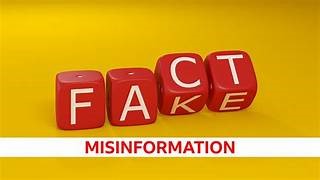
Introduction: On an ordinary school morning, a teacher noticed something unusual. Students were distracted, whispering in small groups, phones hidden under desks. By mid-morning, the source of all chatter became clear: a message circulating online claimed that upcoming assessments had been postponed. It looked official and sounded convincing. But by the time the clarification reached students, confusion had already taken hold.
Stories like this are becoming increasingly familiar in schools everywhere. Misinformation, deepfakes, and ethical challenges around media are no longer distant issues; they now form part of the everyday reality of teaching and learning.
Misinformation often arrives quietly. It might appear as a statistic in an assignment, a claim during a class discussion, or a forwarded message in a student group chat. Most of the time, there is no intent to mislead. Students genuinely believe what they are sharing. A common example many teachers encounter: a well-written project referencing an online article that looks credible but has no reliable source behind it. When asked, the student replies honestly, “It was the first result on Google”.
There is no intent to deceive. The student believes they have done proper research. This is how misinformation survives, not through bad intentions, but through unchecked assumptions. For educators, moments like these reveal an important truth: digital familiarity is not the same as digital literacy.
Up until now, we’ve talked about misinformation, false or misleading information that spreads because someone believes it to be true. It’s often unintentional, yet it can ripple quickly through classrooms, group chats, and social media, leaving confusion in its wake.
Deepfakes, however, take this challenge a step further. While misinformation relies on belief, deepfakes rely on what we see and hear, exploiting our natural trust in images, videos, and voices. They make “proof” look real — even when it isn’t. In other words, deepfakes are misinformation dressed in visuals and sound so convincing that our instincts to trust them are triggered immediately.
Deepfakes, or media altered using artificial intelligence, add another level of complexity. Video or audio clips can now be manipulated to make people appear to say or do things they never did. In one school community, an altered audio clip allegedly featuring a school official began circulating online. Though later proven fake, the immediate reaction was anxiety among parents, confusion among students, and concern among staff.
The experience highlighted a troubling reality: when “evidence” itself can be fabricated, trust becomes fragile, especially in environments like schools, where fairness and credibility matter deeply. For many educators, the reality of deepfakes became clearer through real-world incidents involving well-known public figures.
One widely discussed case involved actor Rashmika Mandanna, whose face was digitally placed onto another person’s body in a manipulated video. At first glance, the video appeared genuine. Many viewers believed it was real before learning that artificial intelligence had been used to alter the footage. The video spread rapidly, causing distress and raising serious concerns about consent, dignity, and misuse of technology spread rapidly, causing distress and raising serious concerns about consent, dignity, and misuse of technology.
But a question arises: why do students share information without verifying it? The answer lies in the fact that it is easy to assume students are careless with information, but the reasons are often more human than we think.
Students tend to trust:
· Information shared by friends
· Content that looks professional or polished
· Messages that provoke strong emotions
In a fast-moving digital world, pausing to question information is a skill that must be taught and modelled. If pausing and questioning is a skill we teach and model for our students, then it’s also a reminder for teachers and faculty to think carefully about how we share, respond or react to information. That’s where media ethics comes in.
When we hear the term media ethics, it can sound a bit intimidating — like something only journalists or tech experts worry about. But in our schools, it’s something we deal with every single day, whether we realise it or not.
Think about it. Every time a student forwards a message, posts a video, or shares a headline, they’re making a choice. Every time we respond as teachers, mentors or faculty, we’re making a choice too. And those choices matter. It’s not about policing every click or creating fear around technology. Media ethics is about thinking before we act and understanding how what we share affects others.
For instance:
· A student shares a post without checking it and it spreads confusion.
· A teacher calmly corrects a rumour in class without embarrassing anyone.
· A school responds to a viral message thoughtfully instead of reacting impulsively.
All of these are lessons in ethics that matter more than any rulebook.
At its core, media ethics is just asking a few simple questions before we hit “share”:
· Is this true? Could it be misleading, or is it based on facts?
· Is this fair? Could it hurt someone or misrepresent a person or group?
· Could this cause harm? Even unintentionally, a post can create fear, worry, or confusion.
The beauty of teaching media ethics in schools is that it doesn’t require extra lectures or complicated tools. It can be as simple as:
· Pausing before sharing anything online
· Checking the source of a news story or video
· Discussing real life examples with students
Asking students to reflect: “How would I feel if this happened to me?”
These small, everyday practices do more than stop misinformation. They teach students critical thinking, empathy and responsible decision-making skills that stay with them far beyond the classroom. The truth is that media ethics isn’t just about rules. It’s a culture we nurture, a way of encouraging students and ourselves to pause, reflect, and make thoughtful choices.
Media ethics might sound like an academic concept, but in schools, it shows up in small yet meaningful ways every day. It’s in choosing not to forward an unverified message, in correcting misinformation without shaming anyone and in acknowledging uncertainty instead of guessing. At its core, media ethics is about asking simple but powerful questions: Is this accurate? Is this fair? Could this harm someone? These questions are not new they align closely with the values schools already uphold, such as honesty, responsibility, and respect and when modelled consistently, they help students develop thoughtful, responsible habits for interacting with information in the digital world.
In a world where information moves faster than reflection, schools remain one of the few spaces where young people can learn to pause, question, and think responsibly. Misinformation and deepfakes may be growing more sophisticated, but so can our responses to them. Through everyday choices like verifying before sharing, discussing rather than dismissing, and demonstrating ethical behaviour, faculty play a quiet yet powerful role in shaping how students engage with information. Media ethics is not an extra lesson to be added to the syllabus; it is a way of thinking we nurture together, helping students grow into thoughtful, responsible individuals in an increasingly complex digital world.
*******************
What next?
Skills Required to be a Good Journalism & Mass Communication
· Effective Communication Skills
· Strong Writing & Editing
· Clarity and Conciseness
· Research & Analytical Skills
· Good Vocabulary
· Digital & Technical Skills
· Good Vocabulary
Career Opportunities in Journalism & Mass Communication
· Journalist / Reporter
· Public Relations (PR)
· News Anchor
· Radio Jockey (RJ)
· TV / Film Producer
· Photojournalist
Relevant Courses in Journalism & Mass Communication
· B.A. (Film, TV & OTT Production) (Honours/Honours with Research)
· B.A. (Journalism & Mass Communication) (Honours/Honours with Research)
· B.A. (Journalism & Mass Communication) - 3 Continent
· B.A. (Journalism & Mass Communication) - International
· B.Sc. (Animation & Visual Graphics) (Honours/Honours with Research)
· Doctor of Philosophy (Journalism & Mass Communications)
· Doctor of Philosophy (Journalism & Mass Communications) - Part Time
· M.A. (Journalism & Mass Communication)
· PG Diploma in Journalism & Mass Communication
************************
Copyright © 2026 amity university | All rights reserved.