When Small Things Change Everything: Nanoscience Igniting a Revolution in Human Civilization

By: Dr Lakshminarasimhan Krishnaswamy, Professor, Amity Institute of Biotechnology, Amity University Gurugram
Introduction: CRISPR, The Molecular Scissors That Edit Life
Imagine standing in a snow-covered Arctic plain, watching a herd of woolly mammoths tread across the frozen earth — creatures last seen by humans over 4,000 years ago. Or look skyward and see clouds of passenger pigeons filling the air, as they once did in the millions. These scenes seem locked forever in the past, yet modern science may soon blur the line between extinction and existence.
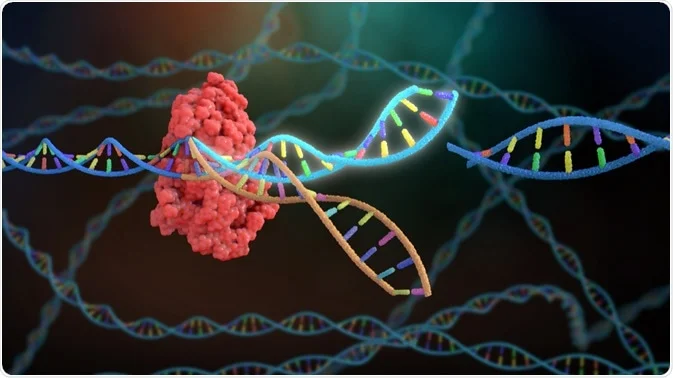
At the heart of this system lies Cas9, a protein that acts like a pair of molecular scissors, guided by a small piece of RNA to the exact spot in the genome where editing is needed (Jinek et al., 2012). With CRISPR, scientists can rewrite the genetic code of life — correcting mutations, enhancing traits, and even exploring the possibility of reviving extinct species.
In simple terms, CRISPR has turned the dream of editing evolution into a tangible scientific reality — a tool that could change medicine, agriculture, and the future of biodiversity itself.
The idea of de-extinction — bringing vanished species back to life — has captured both scientific imagination and public fascination. At the heart of this revolution is CRISPR, a gene-editing tool that gives scientists unprecedented power to rewrite the very code of life. By retrieving DNA fragments from preserved remains and comparing them with those of living relatives, researchers are attempting to “rebuild” lost species gene by gene (Shapiro, 2015). One of the most ambitious projects is led by geneticist George Church at Harvard University, who aims to revive the woolly mammoth by inserting mammoth genes into the genome of an Asian elephant — its closest living cousin (Church & Regis, 2012). The goal isn’t merely to resurrect a prehistoric giant, but to create a cold-resistant hybrid that could help restore Arctic ecosystems disrupted by climate change. Each experiment brings us closer to a future where extinction might no longer be permanent — a true rewinding of evolution’s clock.
This breakthrough has revolutionized biology, medicine, and agriculture — but its most awe-inspiring potential may lie in conservation and de-extinction. For instance, CRISPR can introduce genes that make endangered species more resilient to diseases or changing climates. Scientists have explored using it to edit coral DNA so reefs can survive warmer oceans (van Oppen et al., 2015) or to engineer disease-resistant black-footed ferrets and white-nose-immune bats (Esvelt & Gemmell, 2017). When applied to de-extinction, CRISPR becomes a bridge between past and present. In 2021, the biotech company Colossal Biosciences announced its plan to bring back the woolly mammoth using CRISPR to insert more than 60 mammoth genes into the Asian elephant’s genome. Similar efforts aim to revive the passenger pigeon and the Tasmanian tiger. The dream: restore ecosystems, repair biodiversity, and perhaps correct the damage caused by humans. CRISPR, in this light, isn’t just a tool — it’s a “gene genie”, granting scientists the power to rewrite life’s story. But as every legend warns, even genies come with a price.
The idea of reviving extinct species isn’t just about nostalgia or curiosity — it’s about redemption. Humans have driven countless species to extinction through deforestation, overhunting, and climate change. With CRISPR, we may finally possess the means to right some of those wrongs. For example, reviving the woolly mammoth could help restore grasslands in the Arctic, slowing permafrost melting and reducing greenhouse gas release (Church & Regis, 2012). Re-establishing passenger pigeons could revive forest dynamics they once maintained, helping other bird species thrive. Even editing elephants or corals to adapt better to modern environments could be seen as extending evolution’s natural course — guided, this time, by human hands. Yet the line between resurrection and reinvention is thin. The “revived” mammoth wouldn’t be a perfect clone of its ancestor but a genetically engineered hybrid, adapted for survival in today’s world. As Beth Shapiro (2015) notes, de-extinction isn’t truly about bringing back the dead — it’s about creating something new, inspired by the past. This shift in perspective transforms CRISPR from a mere tool into a creative force — one capable of reshaping nature itself. Humanity, once shaped by evolution, now becomes a shaper of it. But can we bear the moral weight of that role?
With CRISPR’s godlike powers come questions that science alone cannot answer. Should humans interfere with evolution to such an extent? Who decides which species deserve revival — and for what purpose? Critics argue that resurrecting extinct species could distract from protecting the ones still alive (Sherkow & Greely, 2013). Why pour millions into reviving mammoths when elephants, rhinos, and tigers are vanishing today? Moreover, reintroducing long-gone animals into modern ecosystems might create ecological chaos. Habitats have changed, food webs have shifted, and the re-emergence of an ancient species could threaten current biodiversity (Campbell et al., 2016). There’s also a moral dimension. Would these recreated species live healthy, fulfilling lives — or would they suffer in unnatural conditions, forever caught between extinction and existence? As ethicist Henry Greely puts it, “De-extinction may satisfy our guilt more than it serves the animals themselves” (Sherkow & Greely, 2013). Then there’s the deeper philosophical question: Are we overstepping as a species? Humanity already wields immense control over the planet’s climate, oceans, and wildlife. Using CRISPR to design or resurrect life could further shift the balance from stewardship to domination. The fear is not only of failure but of success-without-foresight — of rewriting life’s script without understanding its consequences. Still, many scientists believe the answer isn’t to stop, but to proceed with caution, empathy, and ethics. As Jennifer Doudna, one of CRISPR’s pioneers, reminds us, “The power to control evolution demands the wisdom to use it well” (Doudna & Sternberg, 2017). In the end, CRISPR gives humanity a choice — to play God, or to act as a guardian of life’s diversity. The difference will lie not in the tool, but in the heart that wields it. Perhaps the true miracle of CRISPR will not be in reviving the mammoth, but in preventing the next extinction before it happens.
· Campbell, K., Estrada, A., & Reece, J. B. (2016). Biology: A Global Approach. Pearson Education.
· Church, G. M., & Regis, E. (2012). Regenesis: How Synthetic Biology Will Reinvent Nature and Ourselves. Basic Books.
· Doudna, J. A., & Sternberg, S. H. (2017). A Crack in Creation: Gene Editing and the Unthinkable Power to Control Evolution. Houghton Mifflin Harcourt.
· Esvelt, K. M., & Gemmell, N. J. (2017). Conservation demands safe gene drive. PLoS Biology, 15(11), e2003850.
· Shapiro, B. (2015). How to Clone a Mammoth: The Science of De-Extinction. Princeton University Press.
· Sherkow, J. S., & Greely, H. T. (2013). What if extinction is not forever? Science, 340(6128), 32–33.
· van Oppen, M. J. H., Oliver, J. K., Putnam, H. M., & Gates, R. D. (2015). Building coral reef resilience through assisted evolution. Proceedings of the National Academy of Sciences, 112(8), 2307–2313.
· Doudna, J. A., & Charpentier, E. (2014). The new frontier of genome engineering with CRISPR–Cas9. Science, 346(6213), 1258096.
· Jinek, M., Chylinski, K., Fonfara, I., Hauer, M., Doudna, J. A., & Charpentier, E. (2012). A programmable dual-RNA–guided DNA endonuclease in adaptive bacterial immunity. Science, 337(6096), 816–821.
*****************
What next?
Skills Required to be a Good Biotechnology
· Strong Conceptual Understanding
· Practical Laboratory Skills
· Analytical & Problem-Solving Skills
· Basic Bioinformatics & Computer Skills
· Data Analysis & Statistics
· Communication Skills
· Patience & Persistence
· Attention to Detail
Career Opportunities in Biotechnology
· Research & Development (R&D)
· Pharmaceutical & Healthcare Biotechnology
· Agricultural Biotechnology
· Industrial Biotechnology / Bioprocessing
· Environmental Biotechnology
· Regulatory Affairs & Quality Control
Relevant Courses in Biotechnology
· B.Sc. (Biotechnology) (Hons/Hons with Research)
· B. Tech (Biotechnology) (Honours/Honours with Research)
· Master of Science (Biotechnology) – GATB
· Doctor of Philosophy (Biotechnology)
· Doctor of Philosophy (Biotechnology Part Time)

Copyright © 2026 amity university | All rights reserved.