Amity University, Noida

Amity Centre for Human-Centric AI

Advancing AI for Humanity

We bring together artificial intelligence, human understanding and responsible innovation to develop technologies that strengthen human capabilities, improve wellbeing and create meaningful societal impact.

About the centre

About

Human needs at the centre of AI

AI should be designed not only to perform intelligently, but to understand people, work with people and improve the human condition.

Advancing Human-Centric AI Through Research and Innovation

Explore impactful research projects, emerging innovations, and collaborative initiatives that translate artificial intelligence into meaningful real-world solutions.

AREA 01

Human–AI Interaction & Collaboration

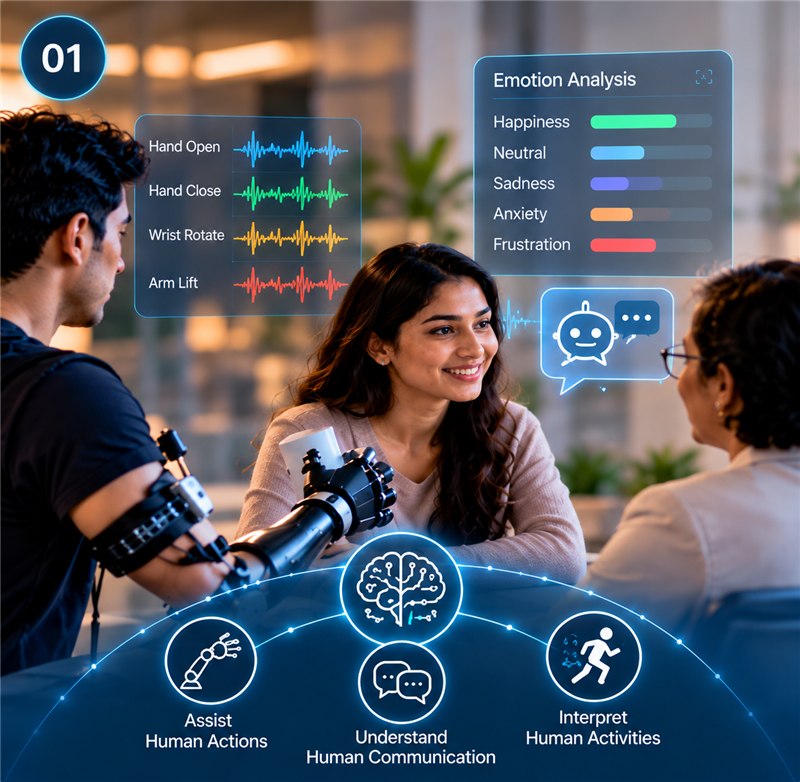
The innovations under this area explore how AI can support interaction between humans and intelligent systems, assist human actions, and interpret human activities and communication. Projects involving prosthetic control, emotion analysis in therapeutic conversations, and exercise recognition demonstrate the potential of AI to support human movement, interaction, and everyday activities.
AREA 02

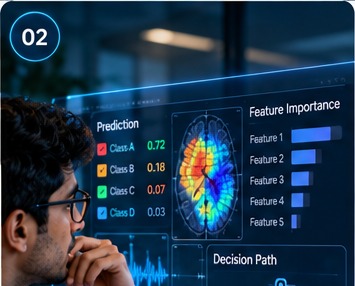
Explainable, Trustworthy & Responsible AI

This area focuses on developing AI systems whose outputs and decisions can be better understood and interpreted. The selected innovations include explainable AI for anthropomorphic robot modelling and explainable cancer CT image classification, reflecting the importance of transparency and interpretability in human-facing AI applications.

AREA 03

AI for Healthcare & Human Wellbeing

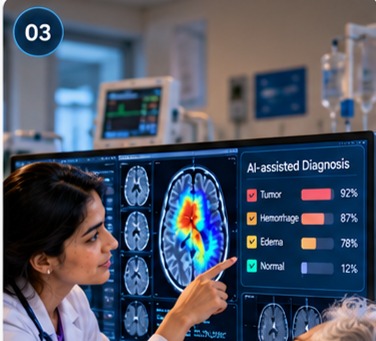
The innovations in this area apply AI to health monitoring, disease detection, medical image analysis, and mental-health research. They cover pain monitoring, EEG-based depression and seizure detection, brain and spine imaging, and the classification of different diseases, illustrating how AI research can contribute to healthcare assessment and human wellbeing.

AREA 04

Assistive & Inclusive Intelligence

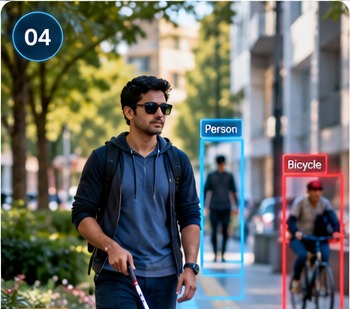
This area brings together AI innovations designed to support accessibility, inclusive communication, and the needs of people with disabilities. Projects such as BlindAssist, Arabic Braille character recognition, and sign-language recognition explore how AI can help people access visual information, written communication, and language-based interactions.

AREA 05

Multimodal Human Understanding

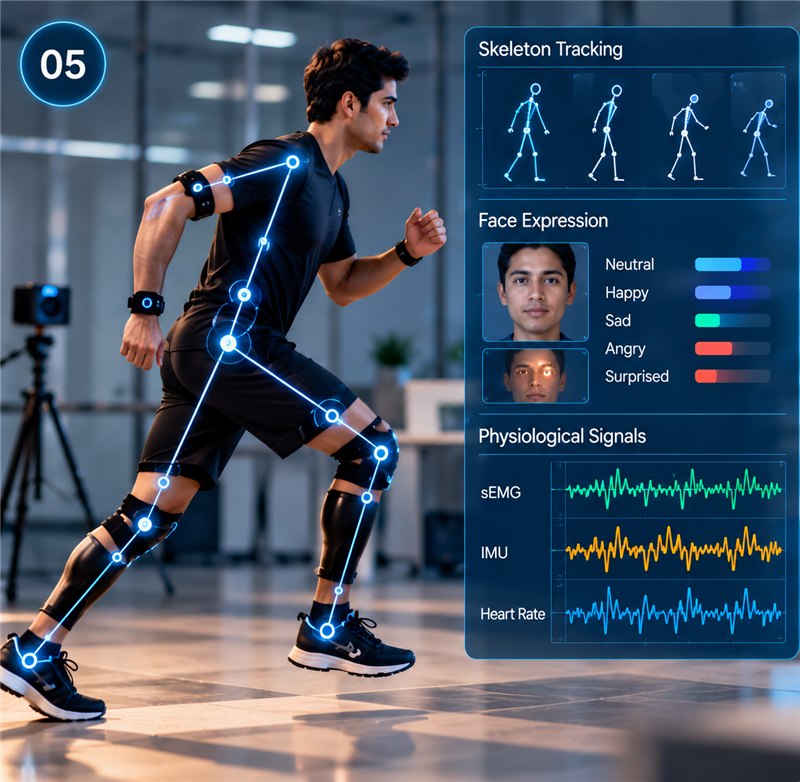
The projects under this area focus on using visual and physiological signals to identify human states and behaviours. Driver drowsiness detection, facial emotion recognition, mental fatigue detection, and wearable-based stress recognition demonstrate how AI can analyse different forms of human-related data to support research into safety, emotional states, and wellbeing.

AREA 06

Human-Centric Generative AI

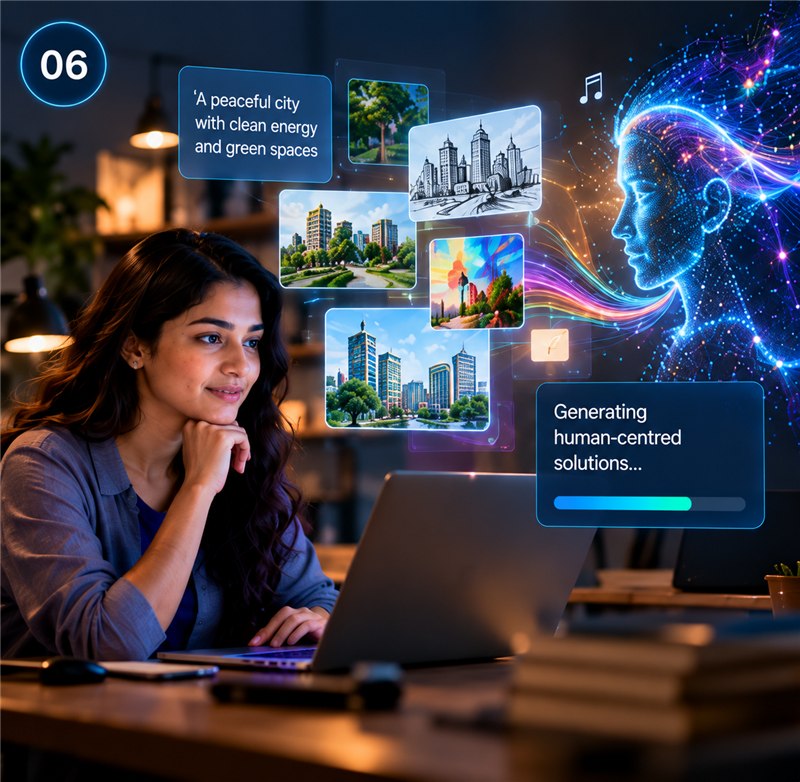
This area explores AI approaches that generate meaningful textual descriptions and reports from visual or clinical information. The selected innovations include cross-lingual ultrasound report generation and image captioning, highlighting the role of AI in translating complex information into more accessible language-based outputs.

AREA 07

AI for Learning, Society & Public Good

The innovations in this area connect AI with broader societal needs, public-health information, mental-health research, and wellbeing-related applications. Projects involving retrieval-augmented generation for public-health response, text-based depression tendency detection, and yoga pose estimation demonstrate how AI research can address applications relevant to individuals and communities.

Our interdisciplinary collaborations

Where Diverse Disciplines Converge to Shape the Future of AI

Bringing together expertise across diverse domains to develop human-centred AI solutions that address complex challenges in healthcare, accessibility, human wellbeing, and society.

Interdisciplinary collaborations