AI Technology & Future Skills

By Dr
Narender Kumar, Assistant
Professor, Amity School of Computer Science and
Engineering) Amity University Gurugram
Introduction: In the age of Industry 4.0
and Industry 5.0, additive manufacturing is becoming very important because it
combines digital design, automation, artificial intelligence, and data
analysis. For students studying engineering and technology, learning about this
technology is key to staying innovative, getting a good job, and pursuing
advanced education.
Additive
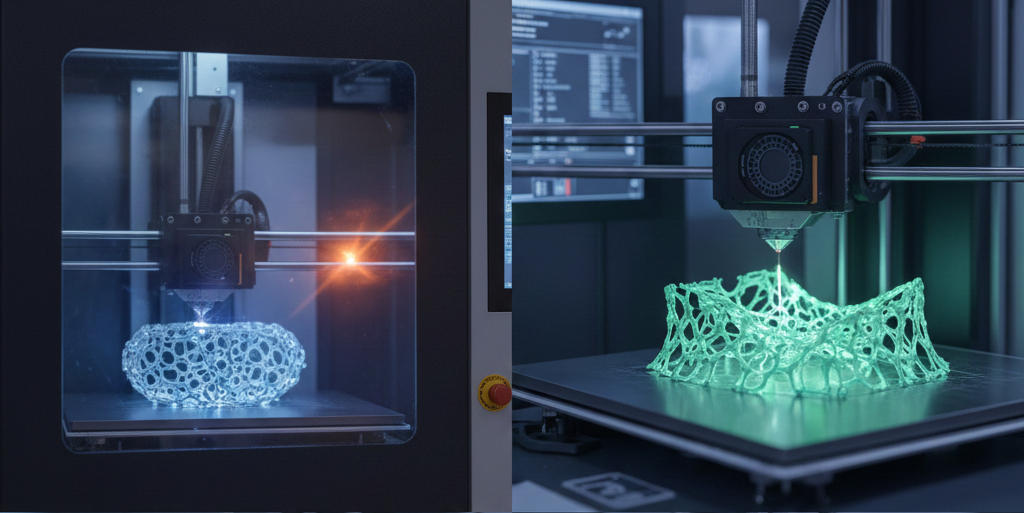
Manufacturing, also called 3D Printing, is a new type of manufacturing where
objects are made by adding layers of material based on a digital design. It's
different from traditional methods that cut away material, which means it uses
less waste, speeds up production, and allows for making more complex shapes. 4D
Printing is a more advanced version of 3D Printing. It uses special materials
that let printed objects change shape, function, or properties over time when
exposed to things like heat, water, light, or pressure. Figure 1 shows how
important Additive Manufacturing, including both 3D and 4D Printing, is in
engineering.
Key Benefits of Additive Manufacturing
Technology
helps create intricate designs that are hard or impossible to make using old
manufacturing techniques, giving engineers more flexibility when developing new
products. Addition to this, additive manufacturing allows for high
customization, so products can be easily adjusted to fit specific customer
requests without greatly affecting cost or how long it takes to produce them.
These advantages show how additive manufacturing improves efficiency,
sustainability, design options, and customer satisfaction in today’s
manufacturing world.
It shows the main benefits of additive manufacturing by illustrating how different advantages are linked. It points out that this method allows for quicker production, helping industries shorten the time it takes to make products and react faster to what customers need. Additionally, it uses only the necessary materials during the manufacturing process, which reduces waste and makes the process more economical and better for the environment.
Future Scope and Career Opportunities
Additive
manufacturing has a bright future and offers great career chances for both
students and experienced professionals. As a fast-growing industry around the
world, it provides solid job security and good employment opportunities in many
fields like manufacturing, healthcare, aerospace, construction, automotive, and
defense. People who learn skills in additive manufacturing can work in various
roles such as Additive Manufacturing Engineer, Design and Simulation Engineer,
AI Engineer for Smart Manufacturing, Manufacturing Data Scientist, Product
Developer, Biomedical Engineer, Robotics and Automation Specialist, and
Research Scientist. This field is highly
interdisciplinary, which not only makes people more employable but also helps
them adapt to new career opportunities over time.
Additionally,
students have lots of chances to study further and do research in areas like
advanced manufacturing, mechanical and aerospace engineering, materials
science, smart materials, artificial intelligence, robotics, digital
manufacturing, and Industry 5.0. Many universities, both in the country and
abroad, offer specific programs and funded research opportunities in these
areas.
Additive
manufacturing offers great opportunities for starting businesses and being
creative, allowing students to set up 3D printing services, make personalized
products, create useful solutions for healthcare, education, and rural areas,
and even get patents or start tech companies with not too much money upfront. Overall,
because 3D and 4D printing technologies are widely used around the world,
additive manufacturing is becoming a very valuable and important skill for
students who want to have successful and flexible careers.
Concluding Remarks
· Additive Manufacturing is a key technology for future engineers.
· It helps drive innovation, offers solid career paths, and provides global opportunities.
· 3D and 4D Printing help students get ready for future industries.
· They support creativity, the ability to adapt, and long-term career success in the age of Industry 4.0 and Industry 5.0.
******
Copyright © 2026 amity university | All rights reserved.