Mental Health & Academic Pressure: Creating Emotionally Safe, Student-Centric Institutions.

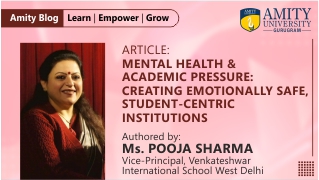
Mental Health & Academic Pressure: Creating Emotionally Safe, Student-Centric Institutions Academic institutions have long been celebrated asspaces of learning, growth, and opportunity.
Yet, beneath the surface of achievement and ambition lies a pressing challenge: the mental health crisis among students. Increasingly, young people are grappling with anxiety, depression, burnout, andfeelings of inadequacy, often fueled by relentless academic pressure. The question is no longer whether mental health should be prioritized in education—it is how institutions can transform themselves into emotionally safe,student-centric environments where well-being is as valued as academic success.
This article explores the intersection of mental health and academic pressure, examining the roots of the problem, its impact, and strategies for creating institutions that nurture both intellect and emotional resilience.
The Weight of Academic Pressure Academic pressure manifestsin multiple forms:
High expectations from parents and teachers: Students often feel compelled to meet standards that ray not align with their personal strengths or interests.
Competitive environments: With limited seatsin prestigious universities and job markets demanding excellence, competition becomes a constant stressor.
Standardized testing and grading systems: These often reduce studentsto numbers, overlooking creativity, individuality, and emotional well-being. Social comparison: In the age of social media, students compare themselves not only within classrooms but globally, amplifying feelings of inadequacy.
While striving for excellence is natural, the relentless pursuit of perfection can erode mental health. Students may internalize failure as personal weakness, leading to anxiety, depression, and in severe cases, suicidal ideation.
The Mental Health Crisis in Education Research consistently shows alarming trends:
Rising rates of anxiety and depression among school and college students. Increased burnout due to long study hours, extracurricular commitments, and lack of rest. Growing isolation asstudentsfeel disconnected from peers and teachersin hyper-competitive environments.
A culture ofsilence around mental health, where students hesitate to seek help for fear ofstigma or judgment.
The crisis is not confined to one region or demographic—it is global. From high-achieving urban schools to rural institutions, the struggle is universal. The challenge lies in shifting institutional priorities from purely academic outcomes to holistic student well-being.
Why Emotional Safety Matters
Emotionalsafety refersto an environment where studentsfeelsecure, respected, and free to express themselves without fear of ridicule or punishment. It is the foundation of effective learning. When students feel emotionally safe:
They are more likely to engage actively in learning.Creativity and innovation flourish, asfear of failure diminishes. Peer relationships strengthen, reducing isolation. Students develop resilience, preparing them for challenges beyond academics.
***



Copyright © 2026 amity university | All rights reserved.