ESG Reporting & Sustainability Accounting


By Dr Ram Jass Yadav, Assistant Professor, Amity Business School, Amity University, Gurugram
Introduction: Banking – Its Journey in Brief
Humans initially lived as hunter-gatherers, and earliest activities resembling banking began around 2000 BCE. Banking is therefore, around 4025 years old started in ancient Mesopotamia, Assyria and India. Modern banking emerged in the 14th Century in Italian city states like Florence, which saw the rise of powerful banking families and formalized practices like double entry book-keeping system.
The British agency house Alexander & Company established the first bank called ‘The Bank of Hindustan’ in 1770 in Calcutta to facilitate traders and introduced modern financial system in the county that unfortunately closed in 1832 due to failure of its parent firm during commercial crises. The British East India Company opened 3 Presidency Bank between 1806 and 1842, namely Bank of Bengal, the Bank of Madras and Bank of Bombay that were merged in 1921 to form the ‘Imperial Bank of India, which was later nationalized in 1955 and re-named as ‘State Bank of India’. Simultaneously, more Indian banks started to operate regionally, like Allahabad Bank (1865), Punjab National Bank (1894), Bank of India & Canara Bank (1906), Bank of Baroda (1908), Central Bank of India (1911), etc. Since banking was restricted to some groups of people known as ‘class banking’, therefore, nationalization of banks began, and 14 Banks nationalized in 1969 and 6 more banks were in 1980. Further, in year 1991, Banking Reforms started with a focus to bring organizational efficiency in financial system and also high governance to give modern shape of banking.
Modern Face of Banking
In the ancient days, banking revolutionized due to the evolution of human beings from hunter-gatherer to civilized life, and SPEED (Structure, Participants, Efficiency, Environment and Dynamics) evolved the central face of modern banking. Key dynamics of modern banking presented below-
Competition shaped the Sector – Pre-reforms banking was predominated by Public Sector Banks (PSBs), focused on social banking, largely regulated in terms of rate of interest, nil or negligible competition and traditional products of deposits and loans through manual operations. The modern banking focused on efficiency with new metrics like CRAR, NPA, Risk management, profitability, besides the entry of new private banks and the disinvestment of 100% government holdings in PSBs. This resulted in the percentage share of PSBs in banking assets from 90% in 1991 to ~60% today. Banks diversified their offerings from traditional mode to innovative products such as Retail Banking (RAM – Retail, Agriculture, MSME), Insurance, Mutual Funds, and Wealth Management, etc. Manual operations become history, and technology advancement changed the face of banking with new terminologies like CBS, JAM, UPI, ULI, CIC, CRILIC, AA, CERSAI, eKYC, EASE, CBDC, etc.
Size and Scale - Banking in its scale spurred with multiplied compared to pre reforms level such as total business jumped from Rs.3.70 lac crores (1991) to ~Rs.415 lac crores today of which deposit Rs.2.38 lac crores & advances Rs.1.32 lac crores in 1991 to Rs.230 lac crores & Rs.185 lac crores respectively. Network expanded from merely 60220 branches (1991) to 165000 branches & 215000 ATM.
Business Model – Class Banking transformed to Mass Banking from nationalization era to further outreach the last mile citizens through brick & mortar or digital channels. Modern banking is now not only available 24x7 but it is offered in self-service mode in the fist and control of the users, anytime and anywhere as Mobile-First customer. Environmental, Social and Governance (ESG) based banking become inevitable in modern time for ethical and sustainable business model. The 5 Cs considered to be focused area of banking which includes CASA mobilization, Credit saturation, Collection efficiency, Connect people for cross sale and their total financial planning and Compliance & governance for sustainable growth.
Talent Management– Banking being People-centric digi-service business, has concern of talent attrition for many Indian banks, due to a competitive resource market. Average attrition rates were in the range of 35-40%, mostly in junior and mid-levels. PSBs generally have significantly lower attrition rates, often in the low single digits as against higher rate of major private banks like Kotak (39%), Axis (29%), HDFC (27%) and ICICI (25%). This attrition resulting loss of experienced staff, increased recruitment and training costs, and potential impacts on operational efficiency. Currently there is gap in available talent pool with regard to diverse skills and forward thinking mindsets, which are imperative to adapt to current trends. Insufficient training programs for specialized skills create an obstacle which not only prevents the staff from keeping abreast of industry trends but defer or deny decisions in time. Hiring CXOs become new trend, however learning & training found to be an instrumental in aligning their strategic vision and hands-on leadership will foster a culture of innovation and positioning for excellence in dynamic landscape.
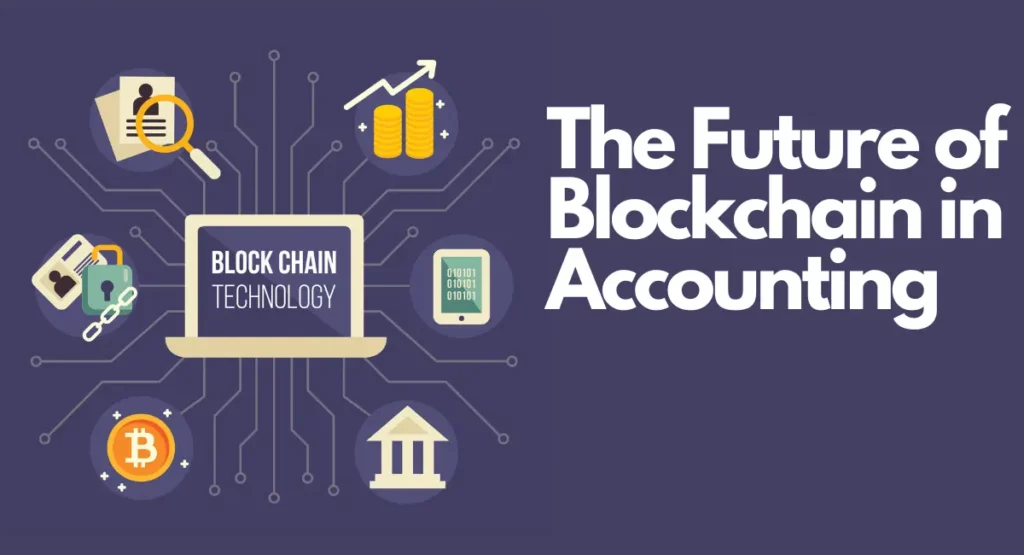
Technological capability – Banks are making investments in technology to improve digital offerings, AI powered chatbots to help customers with their banking needs and ML to identify suspicious transactions. Also partnering with Fintech that are more agile and innovative for integrated banking and thus has a competitive advantage. Blockchain, a distributed ledger technology that has potential to revolutionize banking sector, is therefore, to be used for a more secure and efficient payment system as well as to facilitate cross-border transactions.
Unlock Potentials in Indian Banking
Nominal GDP of India is approx. $4.1 Trillion, in 2025, places India as 5th largest economy worldwide but projected to be 4th in 2026. India’s Credit to GDP, a key metric for bank assets against GDP, was nearly 65% in March 2025. It is significant measure of banking sector size relative to the economy and indicates India’s ratio is lower than other major economies like China (155%), Japan (210%) and US & Germany both had 130%. There are 300 crores deposit accounts and 32 crores borrower loan accounts showing an expanding user base.
The ranking of top banks globally is a trigger for Indian banks to leapfrog further as only two banks factored among top 100 banks globally in terms of assets size i.e. State Bank of India at 43rd and HDFC Bank at 73rd position, however based on capital market size HDFC Bank, ICICI Bank and SBI ranked at 10th, 20th and 25th respectively vide last published S&P Global Market Intelligence data. In view of current size and scale of banks in our country, there is potential to have more banks on the global list to support upcoming opportunities for achieving the aspirational growth envisioned to become the 3rd largest economy in the world.
Sum up
Banking has positioned as one of the essential services in India and it is being People-centric service industry any disruption can significantly impact public life. The country cannot afford more to miss huge potential of the sector to place India as 3rd largest economy in the world, thus it is not Big Bazar for financial offerings but also for the career shine of our Gen-Z as this is one of the powerful sector to accommodate more people to serve the country. We urge upon the young generation to join the banking army to serve the people and contribute in the journey of Viksit Bharat 2047 Mission.
***********
What next?
Skills Required to be a Good Businessperson?
· Communication skills
· Decision-making ability
· Financial literacy
· Leadership qualities
· Time management
· Networking skills
Career Opportunities in Business?
· Entrepreneurship
· Marketing & Sales
· Finance & Banking
· Human Resource Management (HR)
· Business Consulting
· International Business
Relevant Courses in Amity Business School?
· BBA (Banking & Finance) (Honours/Honours with Research)
· BBA (Business Analytics) (Honours/Honours with Research)
· BBA (Digital Marketing) (Honours/Honours with Research)
· BBA (Fashion Business Management) (Honours/Honours with Research)
· BBA (Honours/Honours with Research)
· BBA (Hospital and HealthCare Management) (Honours/Honours with Research)
· B.Com. (Honours/Honours with Research)
· Doctor of Philosophy (Economics)
· Executive MBA (Sustainability Management)
· MBA
· MBA (Hospital & Healthcare Management)
· MBA (Sustainability Management)
· MBA - Executive (for working Professionals)
· M.Com.
· Ph.D. in Economics (Part Time)
*****************
Copyright © 2026 amity university | All rights reserved.