The Brave Choice: Why Asking for Help is a Counselor’s Highest Form of Strength

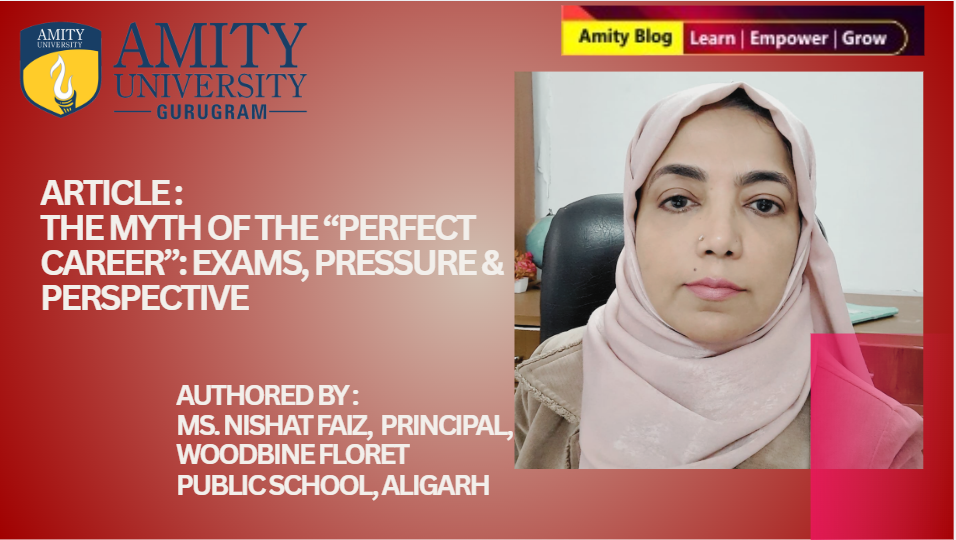
In an era defined by rapid technological advancement, artificial intelligence, and constantly evolving job markets, the idea of a “perfect career” has become more mythical than meaningful. For educators and parents alike, preparing children for an uncertain and dynamic future is no longer a straightforward task. The traditional career roadmaps of the past have faded, yet the pressure to choose the right path has only intensified—often at a very young age.
In earlier times, career choices were limited and largely predetermined. Professions such as medicine, engineering, law, or civil services were seen as symbols of success
and social stability. Parents often envisioned their child’s future even before the child could articulate their own interests. While this approach provided clarity and direction, it frequently ignored a child’s innate abilities, temperament, and passions. Many individuals, as a result, spent their lives trapped in careers they neither enjoyed nor excelled in—leading to frustration, underachievement, and unrealised potential.
However, the present scenario presents an equally challenging extreme. Today’s students are surrounded by a dizzying array of career options—many of which did not exist a decade ago and may not survive the next. Automation and technological disruption have rendered several traditional roles obsolete, while new professions continue to emerge at an unprecedented pace. This unpredictability has left students confused and anxious, struggling to make informed career choices in an environment marked by intense competition and constant comparison.
Examinations, once a tool for assessment, have now become a source of immense psychological pressure. Academic performance is often equated with intelligence, self-worth, and future success. The race for marks, ranks, and prestigious institutions has overshadowed the deeper purpose of education—learning, self-discovery, and skill development. In this process, students are pushed into unworthy competition, burdened with unrealistic expectations, and deprived of the freedom to explore their genuine interests.
Adding to this complexity is the gradual erosion of the traditional support system. Earlier, parents and teachers were trusted mentors, guiding children with experience and wisdom. Today, widening generation gaps, busy lifestyles, social media influence, and exposure to superficial success narratives have weakened these bonds. Young minds are increasingly influenced by peer pressure, online trends, and the culture of instant gratification and show-off, rather than thoughtful guidance and long-term perspective. The result is a growing sense of stress, isolation, and emotional vulnerability among students.
The truth is, there is no such thing as a perfect career. Careers are not destinations fixed in advance; they are journeys that evolve with time, effort, and self-awareness. Success is not defined by a single profession or paycheck, but by alignment between one’s abilities, interests, values, and opportunities. What truly matters is nurturing adaptable skills, critical thinking, emotional resilience, and a lifelong learning mindset.
Parents and educators must shift their role from decision-makers to facilitators. Instead of imposing choices or leaving children entirely on their own, they should help students understand themselves—their strengths, limitations, and aspirations—while exposing them to diverse possibilities. Career guidance should focus not merely on “what to choose,” but on “how to choose,” equipping learners to navigate change with confidence.
In conclusion, breaking the myth of the perfect career requires a collective change in mindset. Exams should assess learning, not define lives. Competition should inspire growth, not fear. And careers should be shaped by purpose and potential, not pressure and prestige. When children are guided with empathy, perspective, and trust, they are far more likely to build meaningful careers—and fulfilling lives—regardless of how the future unfolds.
Copyright © 2026 amity university | All rights reserved.