The Brave Choice: Why Asking for Help is a Counselor’s Highest Form of Strength

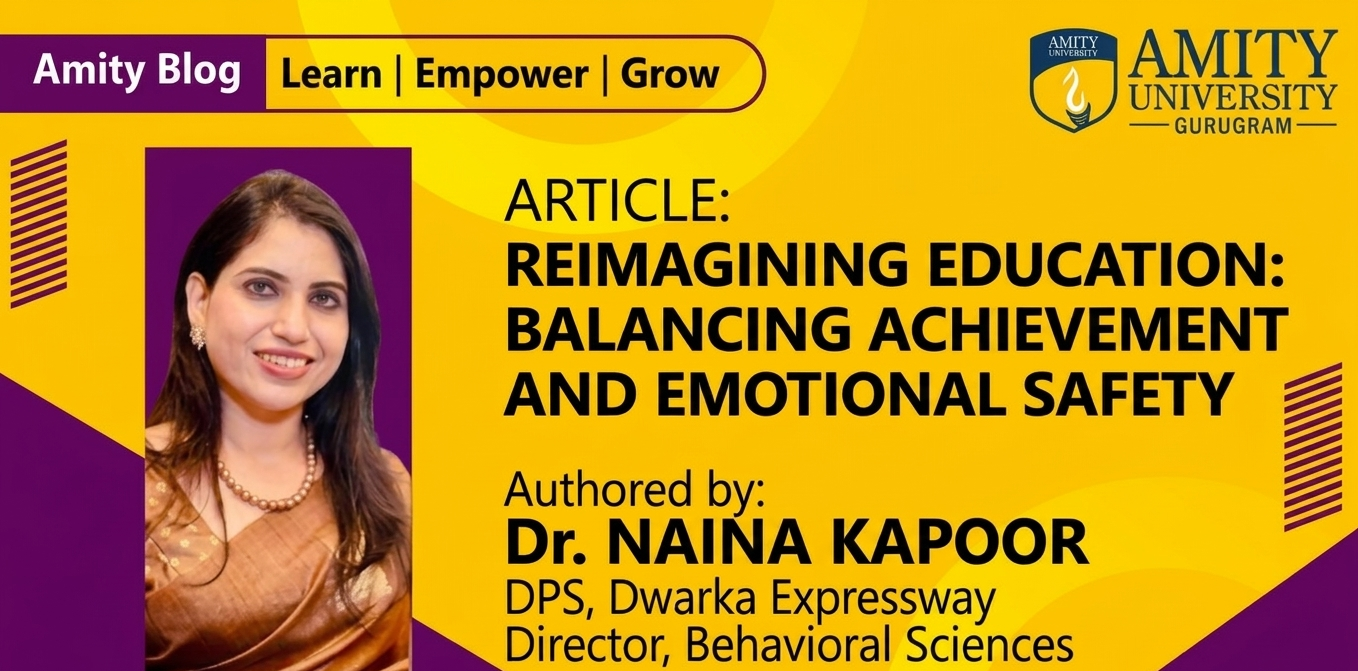
Education has always been viewed
as the great equaliser- a pathway to opportunity, growth, and a better future.
Classrooms are meant to be spaces of curiosity, exploration, and discovery,
where young minds are nurtured and prepared for life beyond textbooks. Yet
somewhere along the way, the purpose of education has begun to shift. For many
students today, learning is no longer associated with joy or growth, but with
pressure, comparison, and an unrelenting fear of falling behind.
The question we must confront is not whether students are capable of handling academic rigor, but whether the systems we have built allow them to remain emotionally safe while doing so.
A Disturbing Reality We Can No
Longer Ignore the academic year, India has once again been confronted with an
uncomfortable and heartbreaking truth. As per recent national data, close to
14,000 students lost their lives to suicide in 2023, reflecting a steady and
alarming rise over the past decade.
Students now constitute a
significant proportion of suicide statistics in the country, a reality that
cannot be explained away as individual weakness or isolated family
circumstances. It points toward a larger systemic concern within our
educational and social structures.
This compels us to ask a
difficult but necessary question:
When education is meant to
empower, enlighten, and open pathways, why is it increasingly becoming a source
of fear, distress, and emotional collapse for so many young people?
How Academic Pressure Shapes the Student Mind
With over fifteen years of experience working at the intersection of mental
health and education, I have witnessed a growing shift in the emotional lives
of students. Academic pressure today is not limited to examination periods; it
is constant, pervasive, and deeply internalised.
Students are raised in environments where
performance is relentlessly measured, compared, ranked, and discussed, often
publicly and repeatedly. This pressure impacts mental health in multiple ways.
Chronic stress and anxiety have become almost normative experiences.
Students report persistent worry
about grades, fear of disappointing parents, difficulty sleeping, emotional
irritability, and reduced concentration. Over time, such prolonged stress leads
to burnout, loss of motivation, social withdrawal, and in many cases,
depression. Perhaps the most damaging consequence is the erosion of self-worth.
Many students begin to equate academic performance with personal value.
A poor score is no longer seen as
feedback or a learning opportunity, but as a personal failure. This belief
system, reinforced by societal narratives and competitive schooling, leaves
students emotionally vulnerable and increasingly intolerant of setbacks.
Shifting Educational Landscapes and Lingering Mindsets To its credit, the
Indian education system, particularly CBSE, has begun acknowledging these
challenges.
Recent reforms reflect a shift
towards competency-based education, experiential learning, and a reduced
emphasis on rote memorisation. There is greater recognition of skills such as
critical thinking, application, and creativity. However, while policy reforms
are necessary, they are not sufficient on their own.
Educational culture does not
change overnight. Despite revised assessment frameworks, students often
continue to receive the message that marks remain the ultimate currency of
success. The emotional climate within classrooms, homes, and peer groups frequently
remains unchanged, sustaining the same pressure under a different structural
format. Board Years and the Weight of Uncertainty Academic pressure peaks
sharply during board years, particularly grade 12.
For many students, this phase is portrayed as
a defining moment — one that determines access to higher education, career
trajectories, and social validation. The uncertainty surrounding college
admissions, fluctuating cut-offs, global disruptions in education pathways, and
increasing competition intensifies this pressure.
Students at this stage are also navigating
adolescence, identity formation, peer relationships, and future anxiety. When
these developmental challenges coincide with intense academic expectations,
emotional resilience begins to fracture. What we often observe is not a lack of
capability, but an overwhelming fear of failure. Fear, when sustained over
time, narrows thinking, weakens confidence, and erodes mental health.
Maslow’s Hierarchy: An Unstable Foundation
Maslow’s Hierarchy of Needs offers a powerful lens through which to understand
this crisis. According to Maslow, individuals must have their basic needs met
before they can move toward growth and self-actualisation. Yet in many educational
environments today, even the need for psychological safety remains unmet. When
students operate in atmospheres dominated by fear of judgment, constant
comparison, and relentless evaluation, emotional safety is compromised. Without
safety, students struggle to experience belonging or develop healthy
self-esteem.
Expecting creativity, autonomy,
or self-actualisation under such conditions is unrealistic. We are asking
students to thrive while standing on an unstable emotional foundation.
Psychological Insights into Student Stress Research in psychology further reinforces
these observations. Cognitive appraisal theory highlights that stress is shaped
by perception. When students perceive examinations as threats rather than
challenges, their physiological stress responses impair both learning and
performance. Maladaptive perfectionism, the belief that anything less than
excellence equals failure, has also been strongly linked to anxiety and
depression among students.
Self-Determination Theory reminds
us that human motivation thrives on autonomy, competence, and relatedness. Yet
many students experience limited choice in learning, constant external
validation, and weakened peer connections due to competition. In such environments,
learning becomes fear-driven rather than curiosity-driven. The Role of
Educators: From Performance to Well-Being As educators, our responsibility must
extend beyond curriculum delivery and result analysis. Creating psychologically
safe learning environments is no longer optional — it is essential.
Classrooms must become spaces where mistakes
are normalised, effort is valued, and emotional expression is met with empathy
rather than dismissal. Mental health education, emotional literacy, and coping
skills need to be embedded into school life. Teachers require training not only
in pedagogy but also in recognising early signs of distress and responding
supportively.
Parents, too, must be engaged as partners in
this process, encouraged to balance expectations with emotional attunement. How
We Are Responding as a School In our school, mental well-being is addressed
proactively rather than reactively. Counselling support is integrated into the
school ecosystem, not positioned as a last resort. Students are provided
structured opportunities to express themselves, seek support, and develop
emotional resilience.
Teachers are sensitised to look
beyond academic performance and recognise emotional needs, while parents are
guided to shift focus from outcomes to overall growth. This approach does not
dilute academic standards. On the contrary, students who feel emotionally safe
and supported demonstrate stronger engagement, better focus, and healthier
motivation.
A Question That Demands
Reflection as student distress and tragic outcomes continue to rise, we
must confront a hard truth: an education system that produces results but
compromises mental health cannot be considered successful. Education must
prepare students not only to excel academically, but to navigate uncertainty,
cope with setbacks, and sustain well-being. The question before us is no longer
whether academic pressure impacts mental health — it clearly does. The real
question is whether we are willing to re-imagine education as a space where
achievement and emotional well-being coexist, and where no child feels that
their life is defined by a report card.


Copyright © 2026 amity university | All rights reserved.